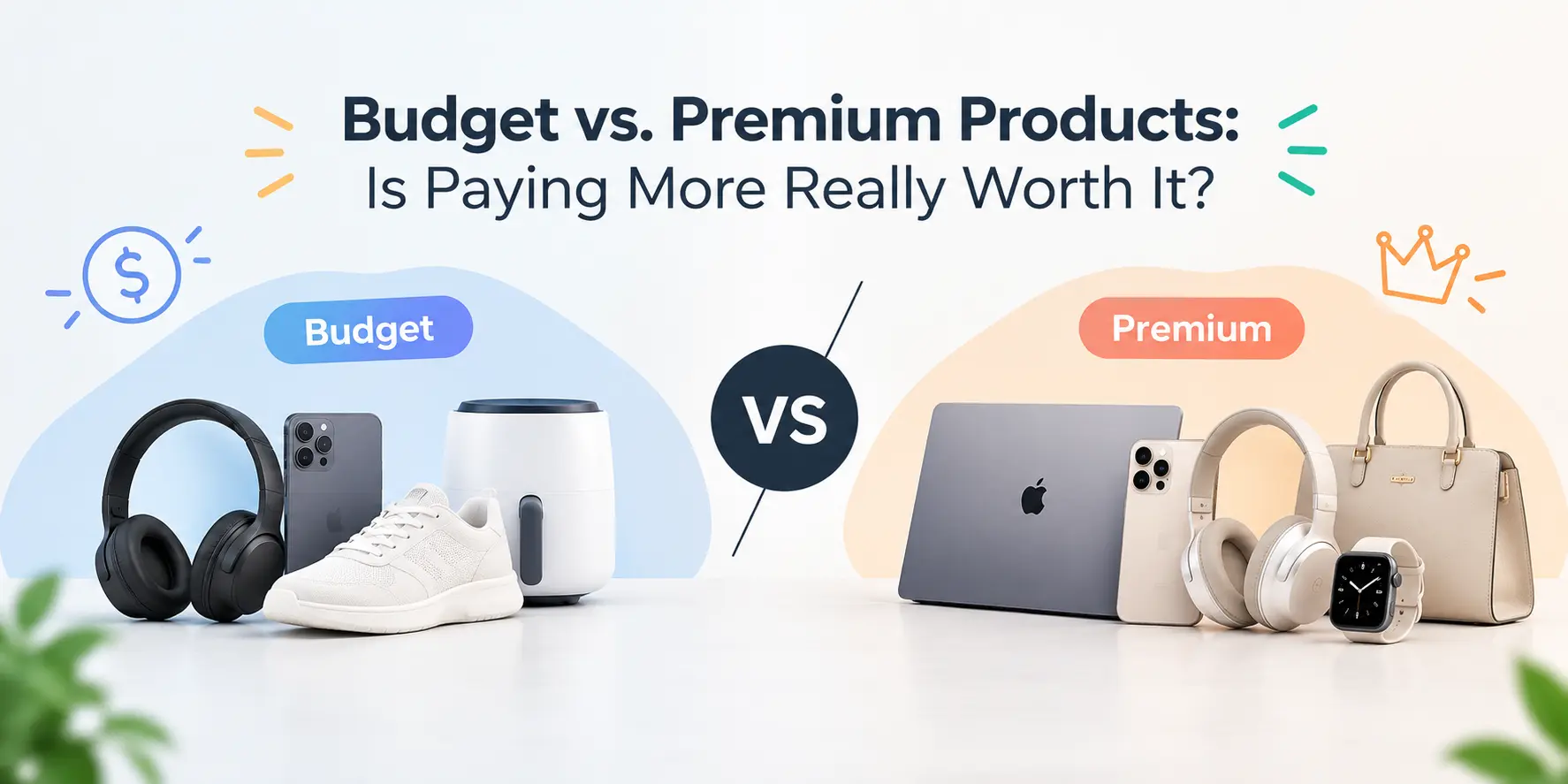
When shopping for electronics, clothing, skincare, or everyday essentials, one question often comes up: should you choose a budget-friendly product or spend more on a premium alternative? While affordable products can help you save money, premium products often promise better quality, advanced features, and longer-lasting performance.
However, a higher price does not always guarantee a better experience. The right choice depends on your needs, budget, and how you plan to use the product. Understanding the differences between budget and premium products can help you make smarter shopping decisions without overspending.
What Are Budget and Premium Products?
Budget products are designed to offer essential features at an affordable price. They are often suitable for everyday use and appeal to shoppers who prioritize value for money over luxury features.
For example, a budget smartphone might provide reliable calling, messaging, browsing, and basic photography without including the most advanced camera technology or premium materials.
Premium products, on the other hand, typically offer additional features, higher-end materials, refined designs, or more advanced technology. Depending on the category, they may also provide better performance, longer warranties, or more comprehensive customer support.
A premium smartphone, for instance, might feature a more powerful processor, a sophisticated camera system, a brighter display, and longer software support.
The important thing to remember is that price alone does not determine quality. Some affordable products perform exceptionally well, while certain expensive products offer features that many consumers rarely use.
5 Key Differences Between Budget and Premium Products
1. Quality and Durability
One of the biggest reasons shoppers choose premium products is the possibility of better durability.
Premium products may use stronger materials, more robust components, or more careful construction. These differences can be particularly important for products used frequently, such as laptops, shoes, kitchen appliances, and luggage.
However, budget products can also offer excellent durability. Reading customer reviews, checking warranty conditions, and researching product reliability can help you determine whether a product is built to last.
Shopping tip: Look for evidence of durability rather than assuming that a higher price automatically means better quality.
2. Features and Performance
Premium products often include advanced features that improve convenience or performance.
For example, premium headphones may offer better active noise cancellation, improved sound quality, and additional customization options. Budget headphones may provide satisfactory audio quality for everyday listening at a much lower cost.
The difference matters most when those extra features directly improve your experience.
If you only use headphones for occasional calls and music, an affordable pair might be sufficient. If you travel frequently or work in noisy environments, investing in better noise cancellation could be worthwhile.
3. Design and User Experience
Premium products often emphasize appearance, comfort, and ease of use.
This may include ergonomic designs, high-quality finishes, simpler controls, or more comfortable materials. These improvements can make a noticeable difference when using a product every day.
However, design preferences are subjective. A minimalist budget product may suit your needs just as well as an expensive alternative.
Before paying extra for design, consider whether it improves functionality or simply makes the product look more attractive.

4. Warranty and Customer Support
Some premium brands provide longer warranties, easier repair options, or more comprehensive customer support. These benefits can add value when a product is expensive or difficult to replace.
However, warranty coverage varies by manufacturer, product, and region. Some budget brands also provide reliable after-sales service.
Before purchasing, compare warranty duration, exclusions, repair costs, and the availability of replacement parts.
A slightly more expensive product may be a better investment if its support arrangements reduce the risk of costly repairs.
5. Long-Term Value
The cheapest product is not always the least expensive option over time.
Suppose a budget appliance costs ₹2,000 and lasts two years, while a premium alternative costs ₹5,000 and lasts six years. Ignoring electricity, maintenance, and other costs, the budget option costs approximately ₹1,000 per year, while the premium option costs about ₹833 per year.
In this hypothetical example, the premium product offers a lower annual purchase cost.
However, the outcome depends on actual product lifespan, repair expenses, and usage. Paying more only makes sense when the additional durability or performance justifies the higher upfront price.
When Should You Buy Budget Products?
Budget products are often the smarter choice when:
- You need a product for occasional use.
- Basic features meet your requirements.
- You are trying a product category for the first time.
- The premium version offers features you will rarely use.
- Affordable alternatives have strong reviews and acceptable warranties.
For example, buying an inexpensive phone stand, basic kitchen utensil, or everyday storage organizer may be perfectly reasonable if it performs its intended function reliably.
Spending more simply because a product is marketed as premium does not necessarily improve its usefulness.
When Are Premium Products Worth the Money?
Premium products may be worth considering when:
- You use the product frequently.
- Performance significantly affects your work or daily life.
- Better durability can reduce replacement costs.
- Advanced features solve a specific problem.
- Repairability, warranty coverage, or software support matters to you.
For instance, a professional who uses a laptop for several hours every day may benefit from a better display, improved performance, a comfortable keyboard, and stronger battery life.
Similarly, frequent travelers may find that durable luggage is worth the additional investment if it withstands regular use.
The key is to pay for benefits you will actually experience, not features you simply like the sound of.
How to Choose Between Budget and Premium Products
Before making a purchase, follow these simple steps:
- Set a realistic budget: Decide how much you can comfortably spend.
- Identify your essential features: Separate must-have features from unnecessary extras.
- Compare specifications: Evaluate performance, materials, warranty, and compatibility.
- Read reliable reviews: Look for recurring complaints and long-term user experiences.
- Calculate long-term costs: Consider maintenance, repairs, replacements, and consumables.
- Compare alternatives: Look beyond brand reputation and marketing claims.
These steps can help you identify products that provide genuine value rather than simply choosing the cheapest or most expensive option.
Conclusion
Budget and premium products both have their advantages. Affordable options can deliver excellent value when they meet your requirements, while premium products may justify their higher prices through better performance, durability, comfort, or useful features.
Ultimately, the smartest purchase is not necessarily the cheapest or the most expensive. It is the product that offers the right balance of quality, functionality, and cost for your needs.
Before spending more, ask yourself one simple question: will the extra features or improved quality make a meaningful difference in my daily life? If the answer is yes, a premium product may be worth the investment. If not, a reliable budget alternative could be the better choice.